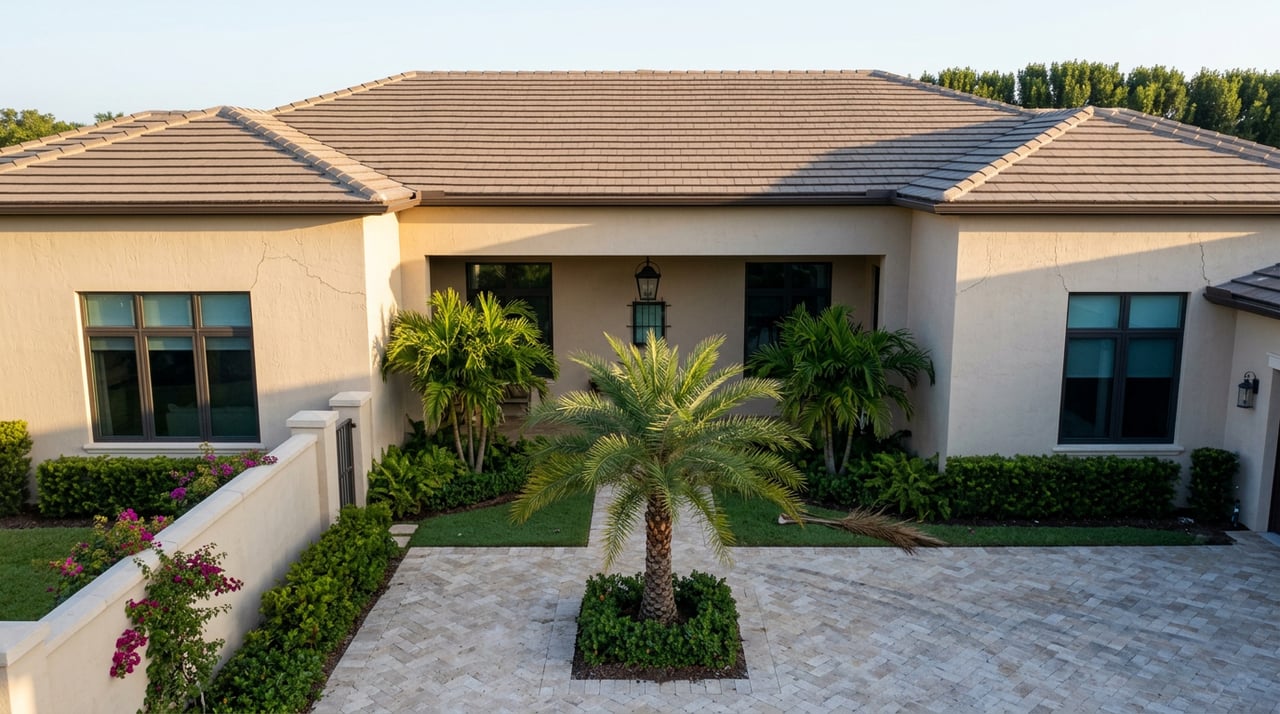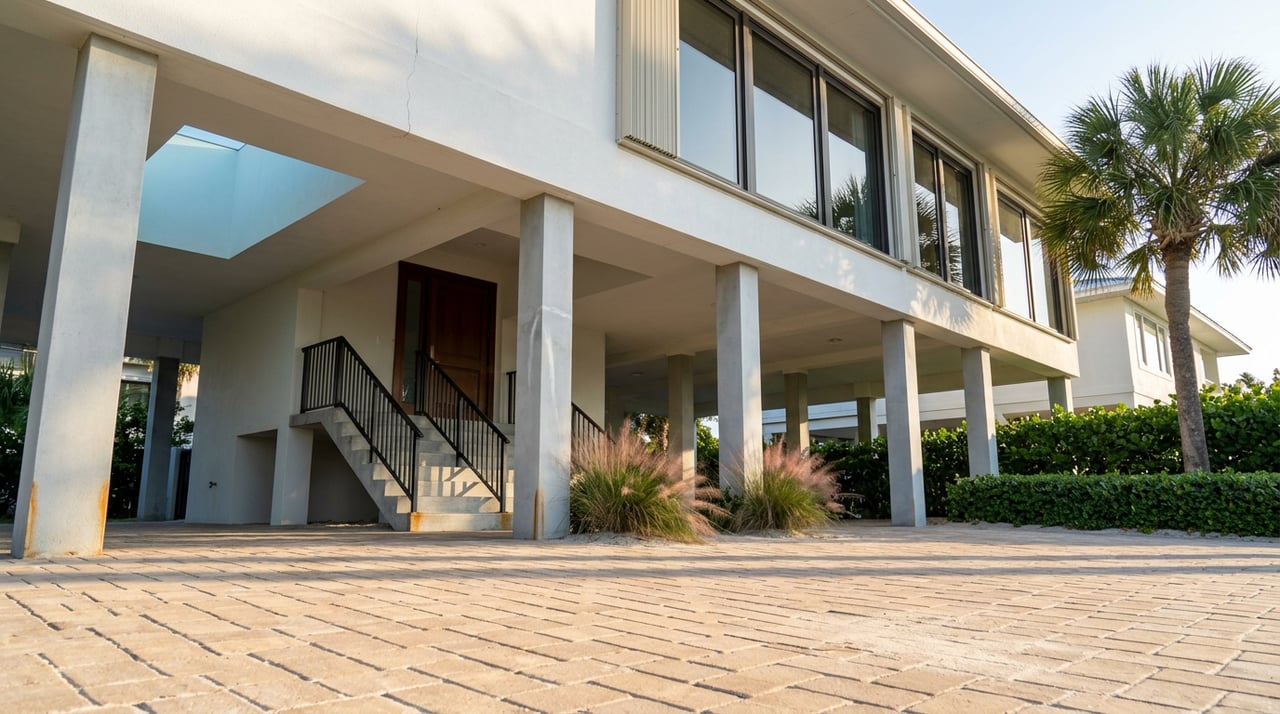
Picture two homes inside Quail West, both listed at the same price, both with a golf course view and a three-car garage. A buyer touring them back to back would have no way to tell them apart on paper. But one seller is relinquishing a transferable Golf Membership at closing. The other is not. That single difference in the resale paperwork means one buyer pays a $25,000 transfer fee to join the club, and the other pays the current $250,000 initiation fee in full. Same house, same street, a $225,000 gap that never shows up in the listing description.
That gap is the reason a Naples golf community purchase can't be evaluated the way a typical Southwest Florida home purchase is. The number on the MLS sheet answers one question. The club answers a second one, and in most cases nobody puts that second number in writing until you're already reading a resale certificate.
The Number Missing From Every Listing
Naples has more private golf courses concentrated in one market than almost anywhere else in the country, and the overwhelming majority of them are private. You either buy into the community or you don't play. That arrangement means the golf club, not just the homeowners association, is a party to nearly every transaction, and clubs handle membership in three fundamentally different ways.
In a bundled community, golf access comes with the deed. There's no separate initiation fee, and the cost is folded into HOA dues instead. Naples Lakes Country Club, Heritage Bay, and Esplanade all work this way. In a mandatory equity community like Grey Oaks, Mediterra, or Quail West, membership is a separate transaction from the home purchase, with its own initiation fee, its own annual dues, and often its own waitlist. A third pattern sits between the two: non-equity clubs like TwinEagles, where the membership is deeded to the property but still requires a non-refundable fee at closing, currently around $150,000 with annual dues near $19,400.
None of these structures is better than the others in the abstract. What matters is that a buyer comparing three homes at the same price point across these three models is not actually comparing three versions of the same decision.
Three Structures, Three Very Different Bills
Here's what the fee structure actually looks like at three of Naples' best-known equity clubs, based on current club materials and figures reported through mid-2026.
| Community | Membership type | Initiation fee | Annual dues (approx.) |
|---|---|---|---|
| Grey Oaks | Equity, resident and non-resident | $375,000 (Full Golf) | $25,286 |
| Mediterra | Equity, owner-only | $300,000 (raised from $250,000 on August 1, 2026) | Mid-$20,000s |
| Quail West | Equity, owner-only, resident-only | $250,000 (Golf) / $100,000 (House) | ~$24,940 / ~$13,100 |
None of these clubs publish a standing fee sheet on their public sites. The membership office is the only reliable source, which is exactly why a buyer working through a general search platform rarely sees these numbers until well into a tour.
Quail West adds a wrinkle that rewards paying attention to the fine print. Because the club is owner-only, meaning you have to already own a home there to apply, the only way to skip the golf waitlist is to buy a resale home where the seller is stepping away from a transferable membership. When that's the case, the transfer fee runs $25,000 for Golf and $10,000 for House, in place of a brand new initiation. A broker report from March 2026 put roughly a dozen buyers on the club's Golf-in-Waiting list. That number moves with every closing, so treat it as a sign of demand rather than a current count, and ask the membership office directly for where the list stands today. Either way, a transferable membership isn't a minor perk. It can be the difference between playing this winter and waiting years.
The Clock Is Already Running
The Mediterra number in that table already moved once this year, and it's worth sitting with why. The club raised its initiation fee from $250,000 to $300,000 effective August 1, 2026, which means a buyer who closed in July paid $50,000 less to join the same club, with the same course access, than a buyer closing today.
Mediterra is also mid-construction on a new Sports & Lifestyle Center, a project that follows recent renovations to the club's main clubhouse and private Beach Club. The existing 18,000-square-foot Sports Club stays open through the build, but the new facility, spanning more than 30,000 square feet, is part of a broader capital plan across the community's roughly 1,700 acres and is targeted for completion in summer 2027. Full equity golf slots at the club are capped at 450 total, according to community materials, which means capital projects like this one tend to show up eventually as assessments on the membership side rather than surprises on the HOA side.
None of this is a reason to avoid Mediterra. It's a reason to ask, at any equity club, whether a fee increase already went into effect this year, and whether another one is already on the calendar before you close.
Bundled Doesn't Mean Optional
The instinct for a buyer who isn't a serious golfer is to assume a bundled community solves the whole problem, since there's no six-figure initiation fee to write a check for. That's true as far as it goes, but bundled comes with its own trade-off that matters just as much for a non-golfer.
In a bundled community, the membership is tied to the property, not to you personally. It transfers automatically when you buy, and it doesn't come off when you sell unless the next buyer also takes the home. That means you're paying the golf line item inside your HOA dues whether you play once a year or never, for as long as you own the home. It also means bundled clubs tend to carry more total members per course, sometimes several hundred more than an equity club allows, which is the reason tee times at bundled communities get tight during the November through April season in a way they don't at capped equity clubs.
The trade is real in both directions. Equity buys exclusivity and, in many cases, a fee that behaves more like an asset than a pure expense. Bundled buys predictability and a lower entry cost, in exchange for less control over how many other households are sharing the same course.
What This Means While Inventory Is This Tight
This distinction matters more right now than it would in a slower market. Naples Area Board of Realtors data through July 2026 shows single-family sales in North Naples, home to several of the area's best-known private clubs, up 11.1% year over year with the median closed price jumping 46.2% to $1,132,500, while inventory in that same submarket fell 22%. Naples-wide, active listings were down 21% from a year earlier, and the average home took 108 days to sell in July 2026, a modest increase from 101 days the year before that reflects buyers taking their time on price rather than demand actually cooling.
Golf community sales are part of that story, not separate from it. In June 2026, an estate inside Grey Oaks sold for $11.5 million, roughly 10% above its asking price. Quail West's all-time record sale closed in April 2026 at $11.3 million. At the other end of the demand curve, Club Pelican Bay has reportedly stopped accepting new membership applications altogether, which means for some clubs the conversation isn't about initiation fees at all. It's about whether a door is open to walk through in the first place.
When inventory is this tight and clubs are moving between waitlists and open enrollment on their own timelines, the membership structure attached to a specific home can matter as much as the home itself in determining what you can actually close on this season.
Questions Worth Asking Before You Write an Offer
A few questions belong in every Naples golf community conversation before an offer goes in, regardless of which club is involved.
- Is the membership deeded to the property, or is it a separate contract between you and the club?
- If the seller holds a membership, is it transferable, and at what fee versus a new initiation?
- Has the club approved any fee increase or capital assessment that takes effect before or shortly after your expected closing date?
- What is the current waitlist for the membership tier you actually want, in writing from the membership office rather than the listing agent?
- Are annual dues, food and beverage minimums, and any capital assessments included in the number you've been quoted, or added on top of it?
A Few Common Questions
Does every Naples golf community require a golf membership to buy a home there? No. Some communities require at least a social or house membership as a condition of ownership, while others make golf fully optional. Bundled communities include it automatically with no way to decline.
Can a buyer negotiate who pays the initiation or transfer fee? Yes, in principle. It's a term of the purchase contract like any other closing cost, though which side customarily pays it varies by club and by how competitive the specific listing is.
Do initiation fees ever come back to the homeowner? In some equity structures a portion can be refundable or transferable when you leave, though this varies significantly by club and has trended away from full refunds in recent years. Always confirm the current policy directly with the membership office rather than relying on older marketing material.
If you're weighing a golf community purchase in Naples and want the membership math worked out before you fall in love with a floor plan, Jennifer Rosenwald can walk through the specific clubs on your list, what each one actually costs to join this season, and what's changing before you close. Let's Connect.